
The English Olive Press; August ‘26

July has been a wonderful month full of growth and wildlife at The English Olive Co; the delicate white flowers are turning into fruit, the tree branches are growing, and the pollinators and wildlife are abundant. But still no rain!
Hello and welcome to all our new subscribers and thank you all for reading our latest Newsletter, where we are sharing some of the highlights and what we have been up to in July.
Above average temperatures and a continued lack of rain are hitting the headlines; hosepipe bans in place and four ‘heatwaves’ have been recorded this summer already! It is fair to say that the olives are the only crop on the farm that are enjoying these above average temperatures! The other crops on the farm are struggling, with spring planted vegetable and cereal crops looking like they will be 15-20% down on yield, and the winter sown wheat and mustard crops are slightly better, but still below average.
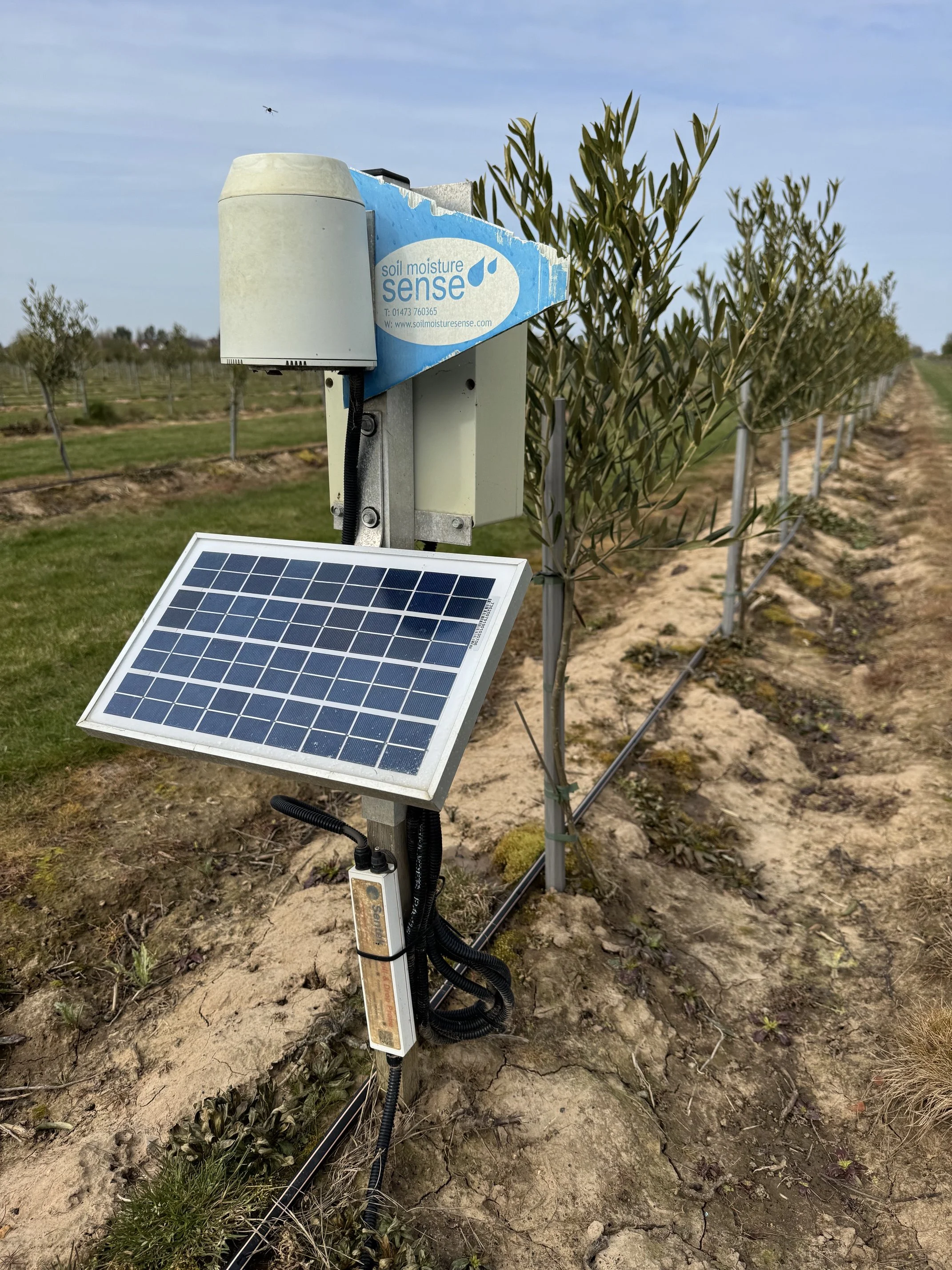
Water is crtical to plant growth, and even olives perform better with a suitable amount. Established olive trees will survive and fruit with very little rainfall, but given optimal water quantities by rainfall or irrigation can increase olive yield up to x6 fold. Our olive trees are very young in life, and currently have a small but developing root system, and so they need help with water availability during dry times. We do this by applying irrigation via our trickle (drip) irrigation pipes on every line of trees. We also use soil moisture probes to see how much water is in the soil, to help us determine how much irrigation water to apply.
During the winter we abstract water from a local Internal Drainage Board (IDB) drain through a granted Environment Agency abstraction license. The abstraction license allows us to abstract water in times of plenty (after heavy rainfall and during the winter), before the water is ‘lost’ to the North Sea and becomes very saline. The abstracted water is stored in our 10 acre reservoir, which holds 80,000,000 litres of water, the size of 32 Olympic swimming pools! Saving water in times of plenty to use in dry springs and summer is common sense, but it is a significant investment with many planning and environmental hurdles to get through!
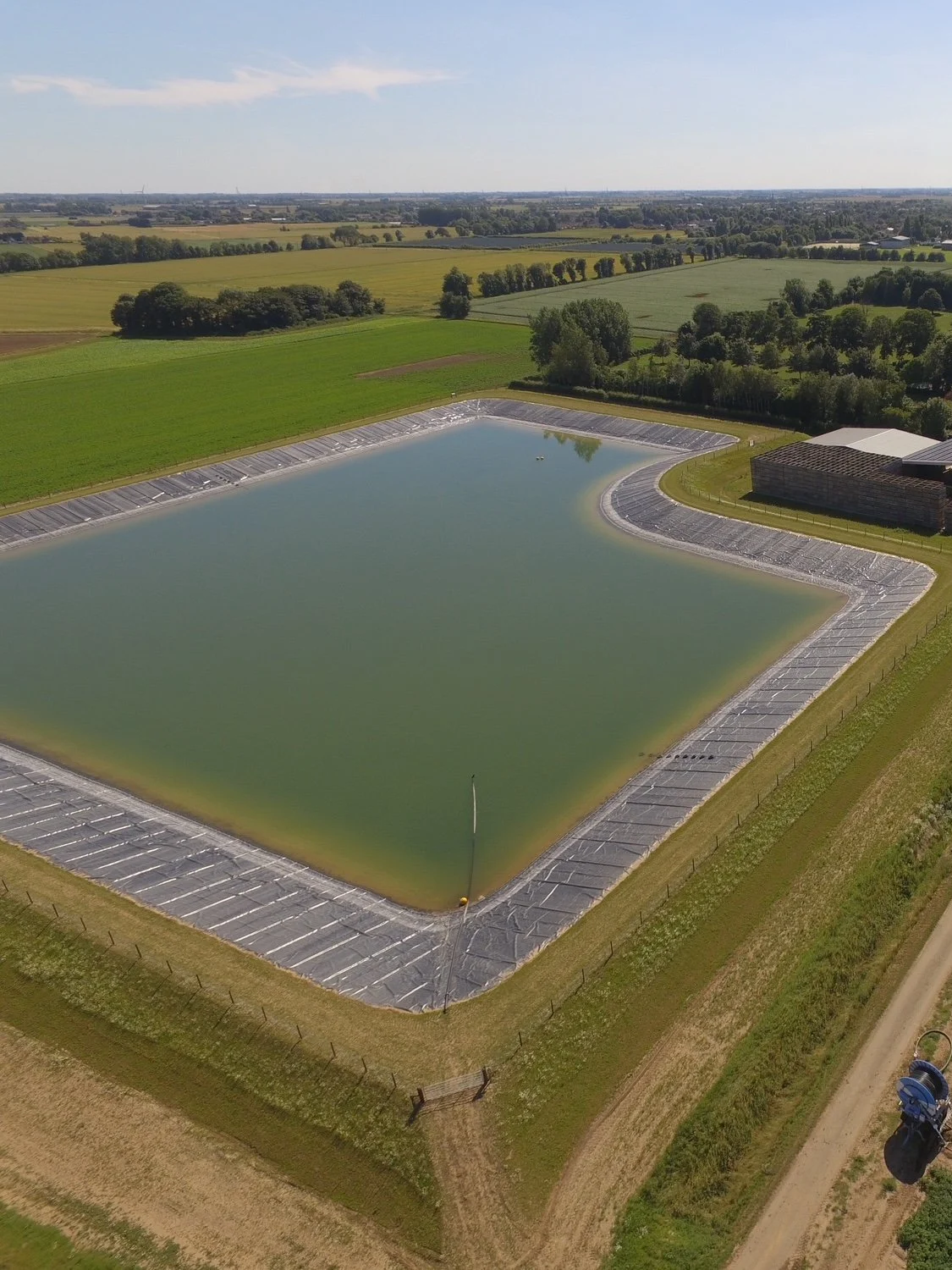
The farms 10 acre reservoir providing water to help optimise tree growth and fruit formation during the dry springs and summer.
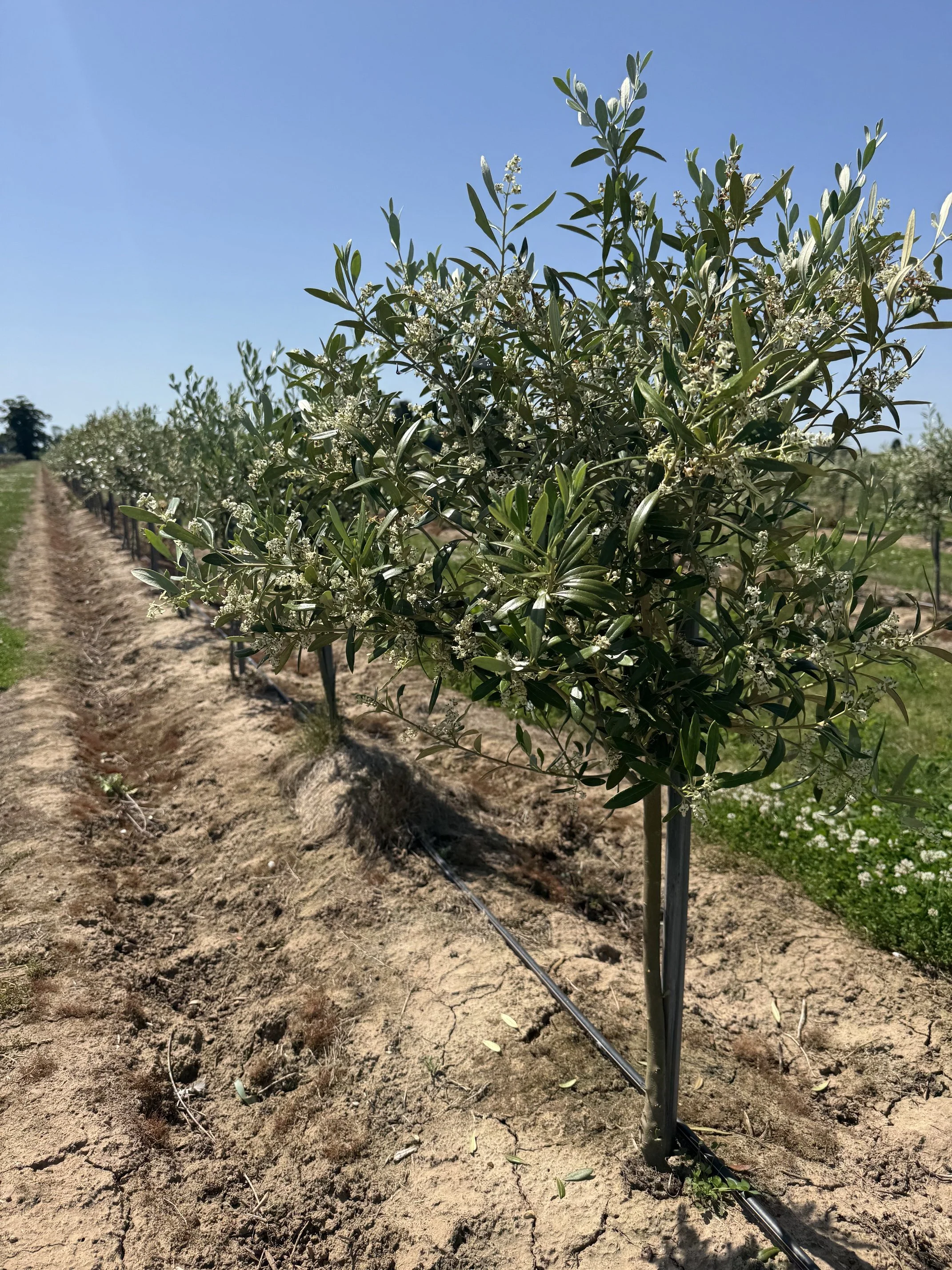
One big benefit of the warmer than average temperatures and with the water applied via our trickle irrigation system is that the olives have really enjoyed the growing conditions, and probably feel like they are back in Mediterranean! During July it has been very rewarding to see the delicate little white flowers turn into small fruit, and give us an indication that we will have an olive crop to harvest and to make a larger quantity of English Olive Oil this winter. The olive trees flower for about one month, but with several different varieties in our olive grove this flowering period extends over about two months. The olives that have now formed range from pea size to baked bean size!
The olive trees branches are also growing, and to control branch length we snip the end off when the branches get to 30-40cm long to then promote secondary branching again. This is done to give strength to the tree and branches against wind and hopefully support a bountiful quantity of olives! Our branch length is shorter than what growers would trim to in the Mediterranean as we are quite an exposed site, and we would rather have strong branches with less fruiting sites than snapped branches and no fruiting sites!
Weeds have also been growing around the trees, and it is important we keep control of them so they do not use the water or nutrients we are applying for the olive trees. Plenty of back strengthening exercise is used to pull the weeds out, but hopefully in the near future the tree trunks will be strong enough to withstand a tractor mounted mechanical weeder buzzing around their bases. One benefit of the hand trimming and hand weeding is that every tree gets a good inspection, and so if any unwanted wildlife is spotted they can be removed, such as the very hungry Privet Hawk Moth caterpillar that visits us each July!
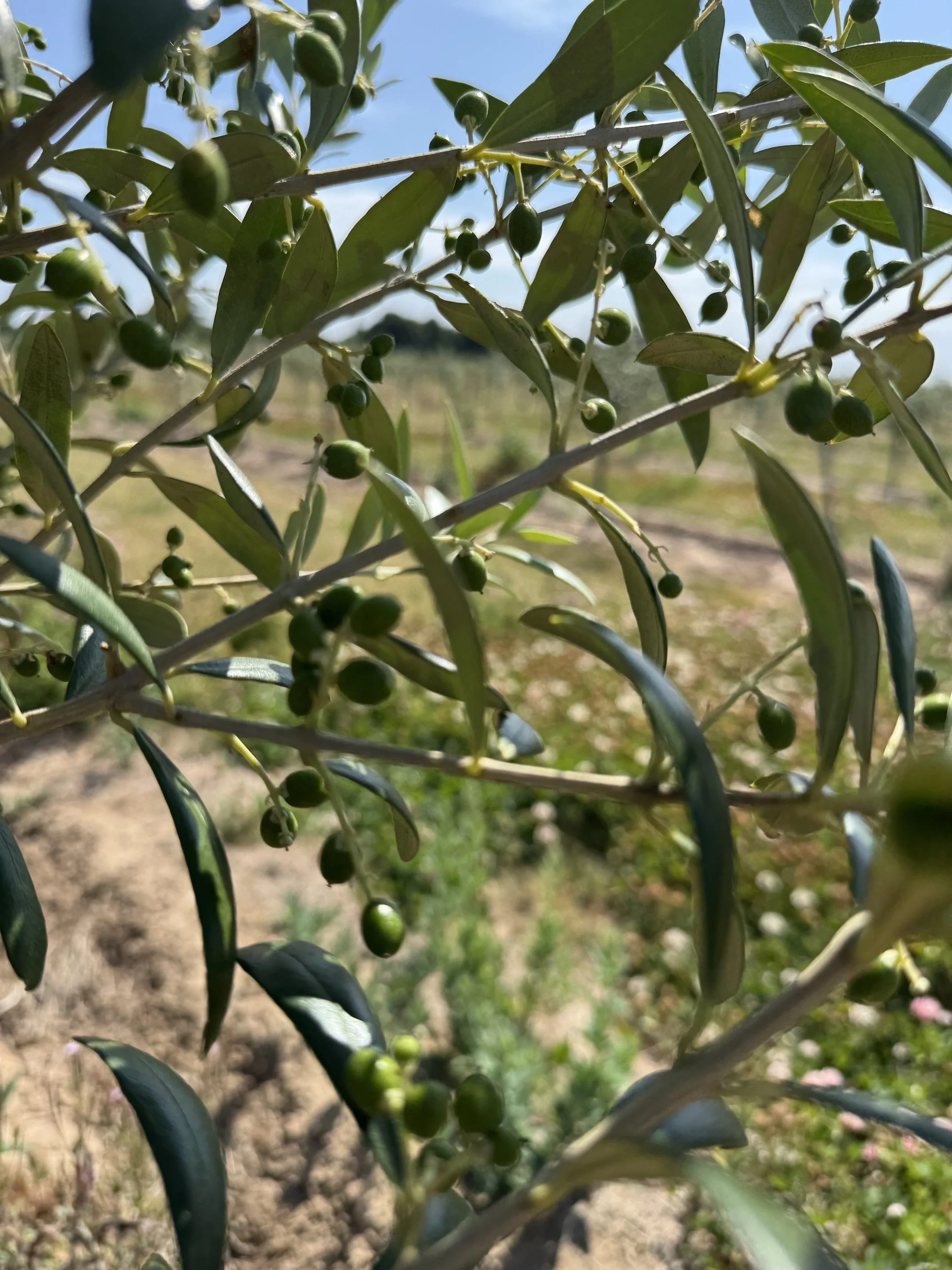
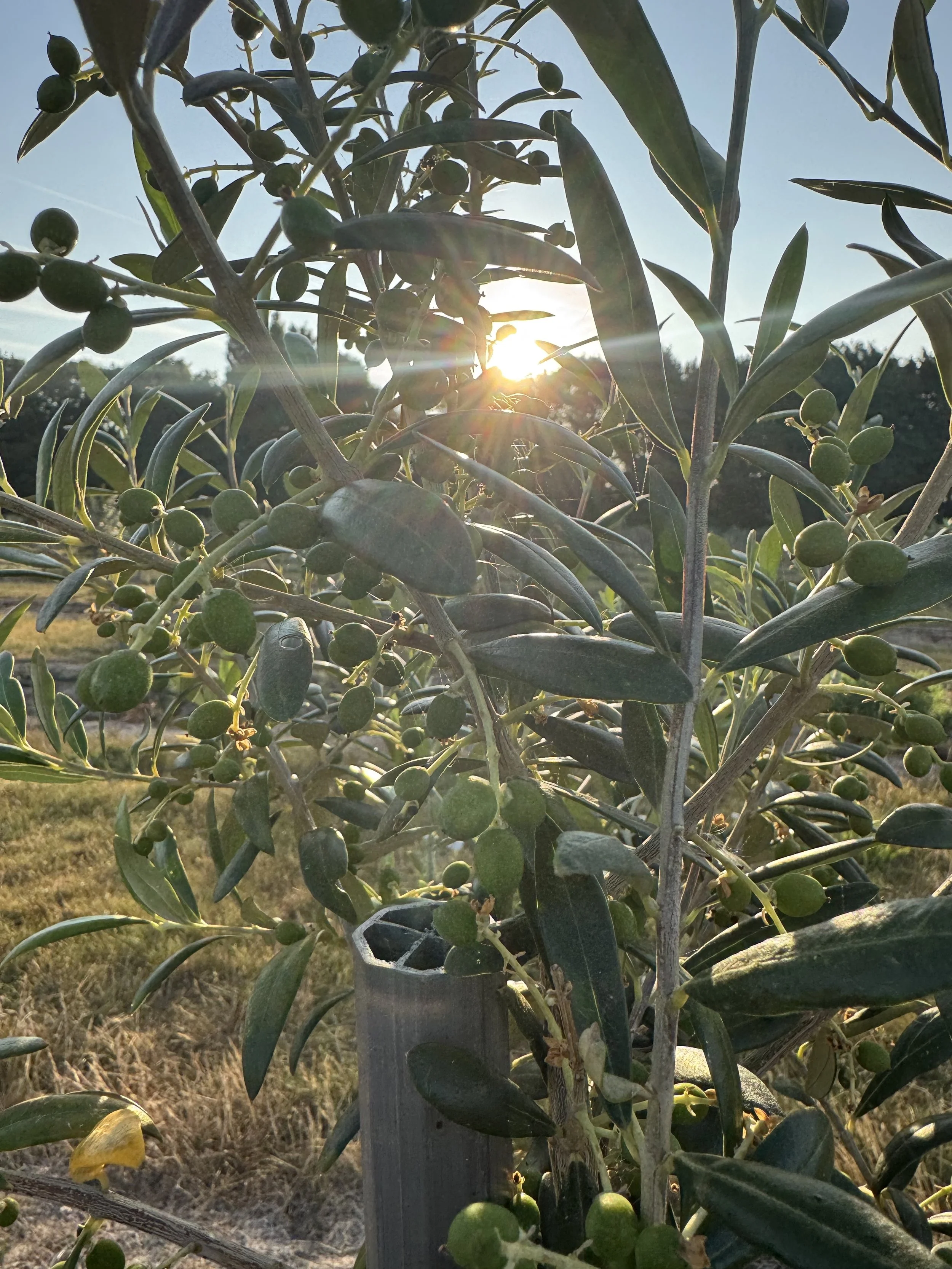
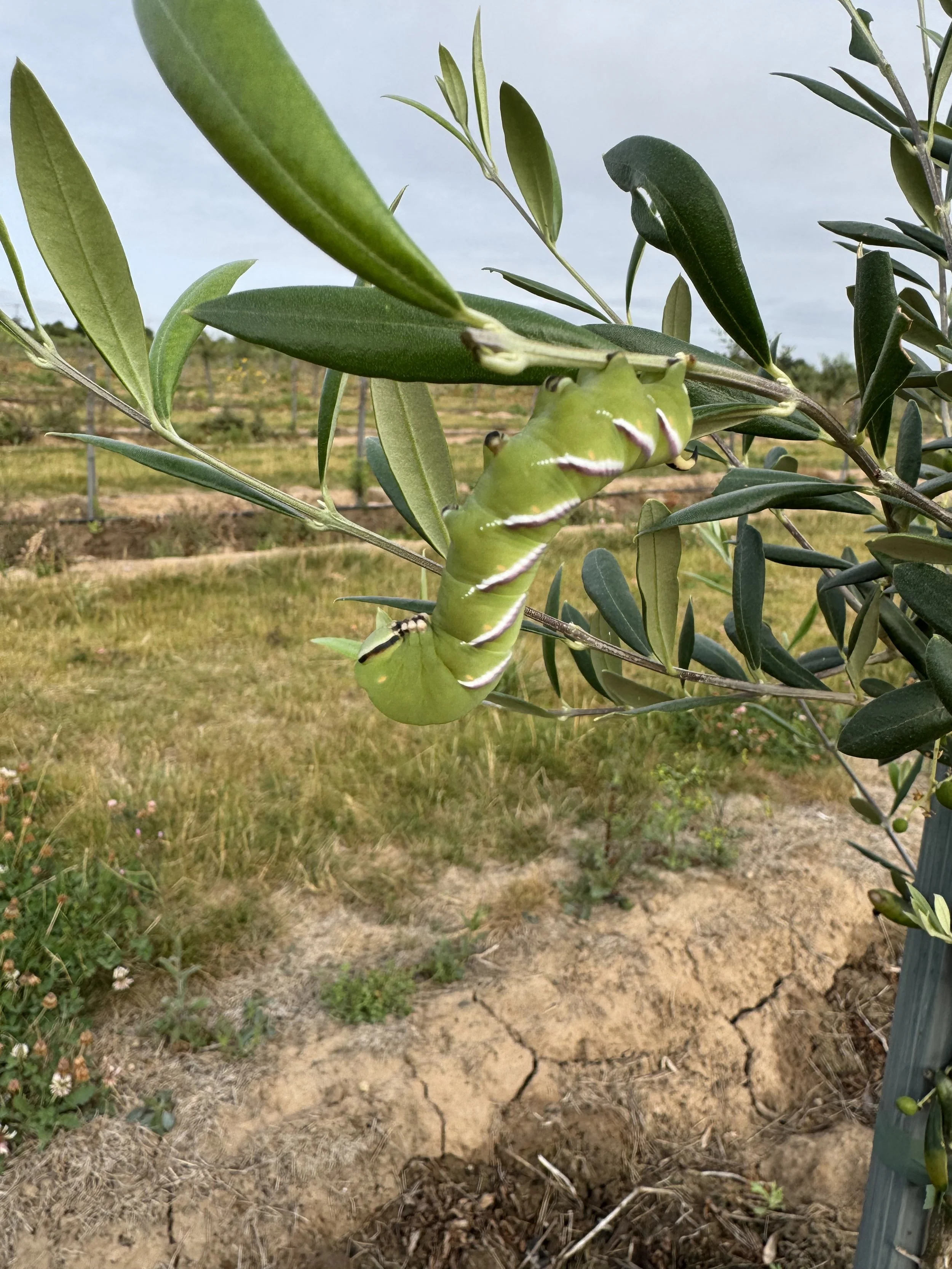
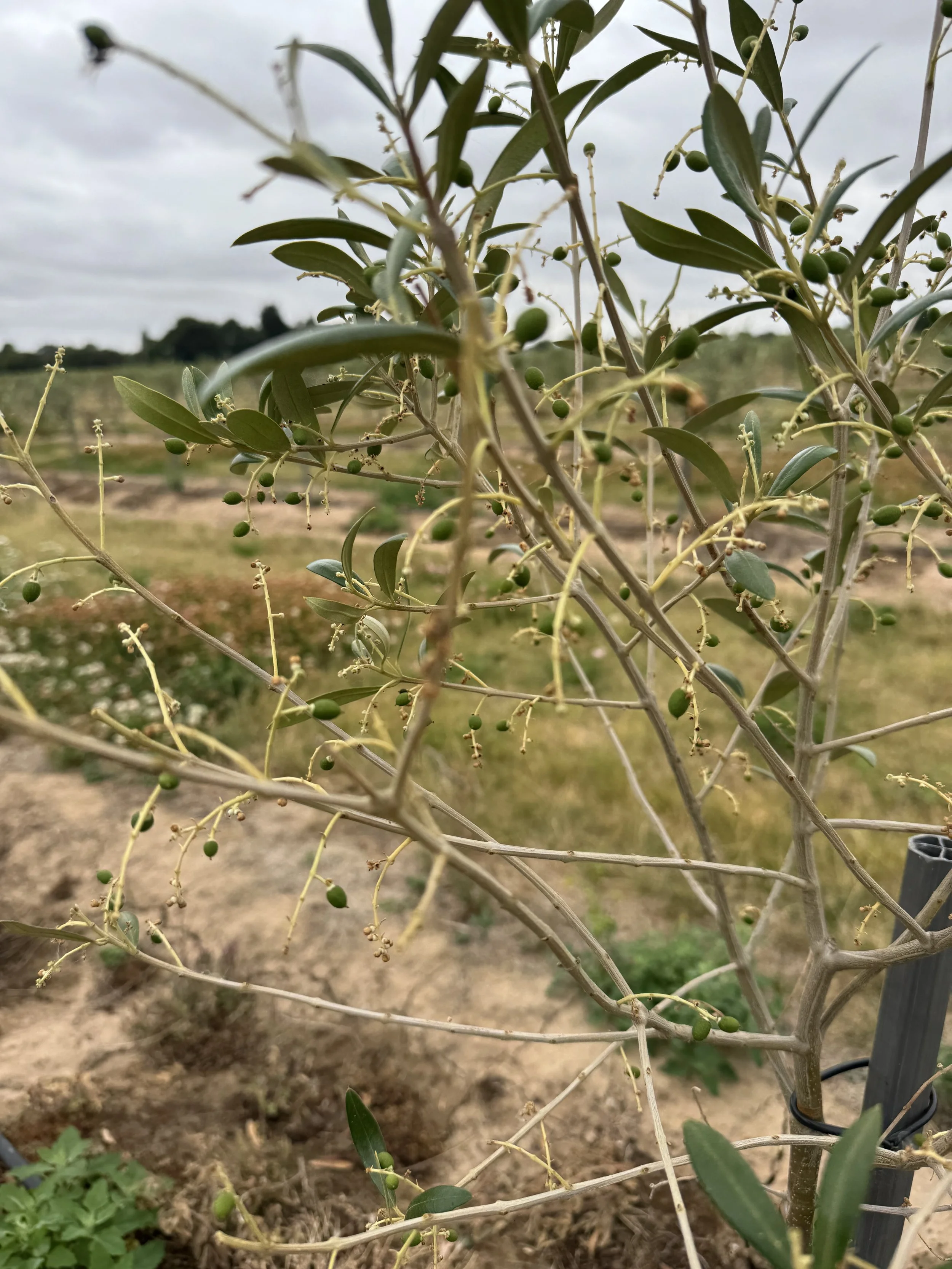
The olives and the trees are growing nicely, and we are keeping an eye out for the hungry caterpillars, who can eat the leaves very quickly!
During July David was fortunate to go on a family holiday to South Africa, and he managed to squeeze in a visit to one of the countries earlier olive groves, Morgenster Estate, established in Somerset West, being about 50km east of Cape Town.
Morgenster Estate was founded by Giulio Bertrand in 1992, and in 1994 he planted 42 hectares of land (100 acres) with 30,000 trees, mainly with Italian varieties. Giulio is often considered the ‘father of olive oil’ in South Africa, and he is succeeded by his wife and daughter. The olives groves are harvested in February to April, mainly by tree shaking and hand collection, and then milled and bottled on site. There are about 3,500ha of olives groves in South Africa, compared to 1.7m hectares in Spain , 1.1m hectares in Italy or 0.7m hectares in Greece.
Alongside the olive grove at Morgenster Estate the family also have 30 hectares of vines, so it was only polite that David & Sally had an olive oil and wine tasting session while visiting!
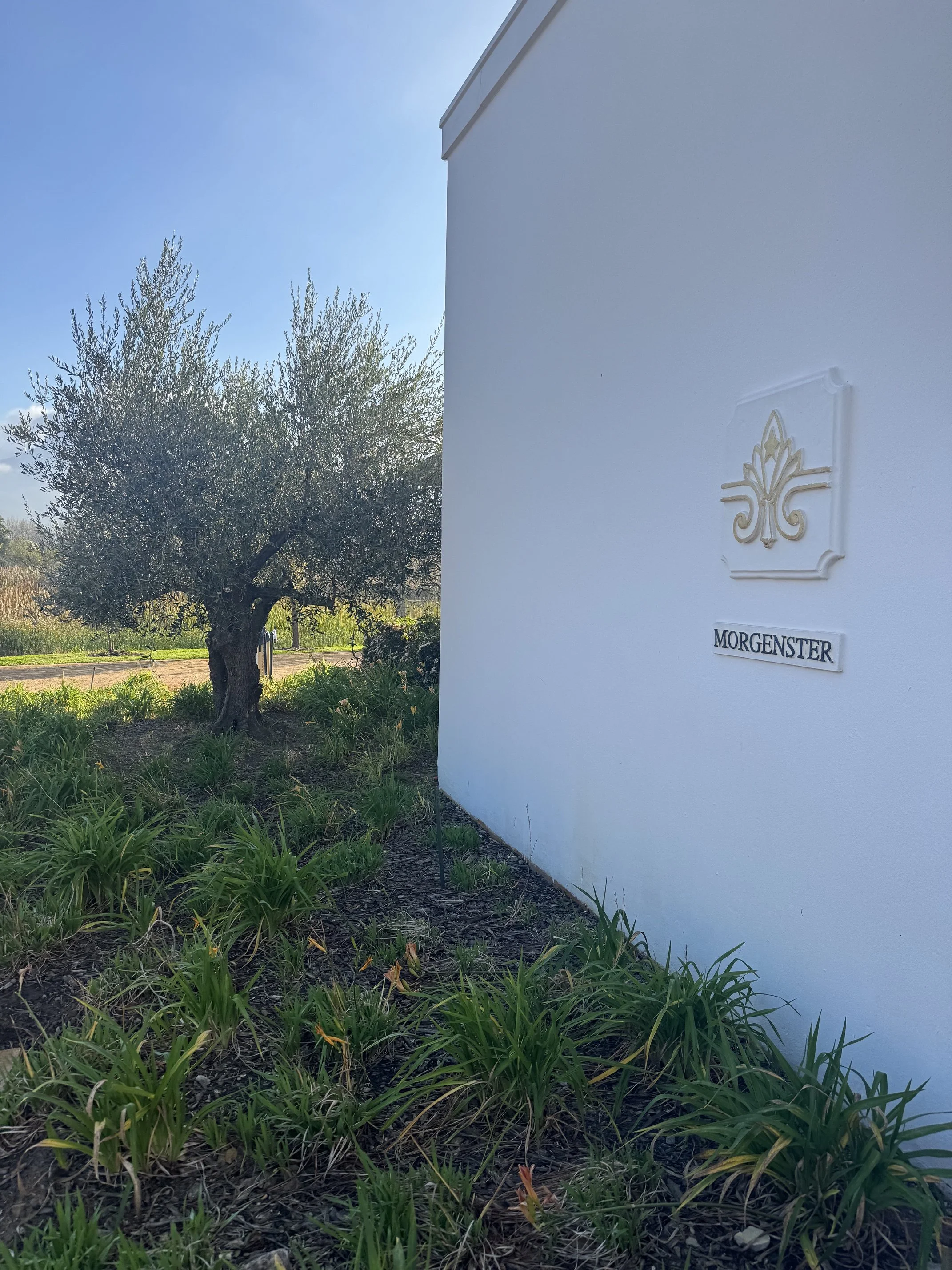
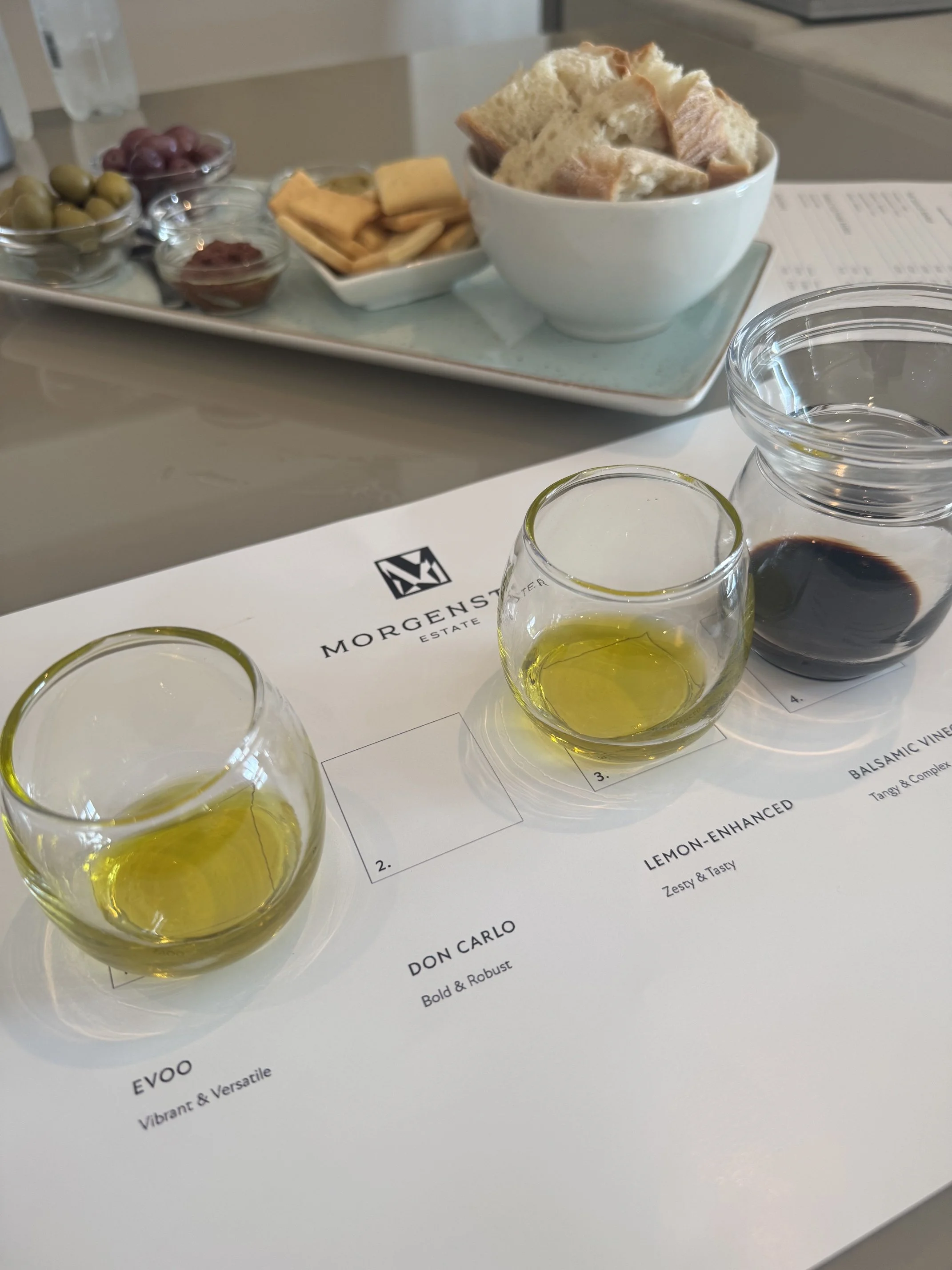
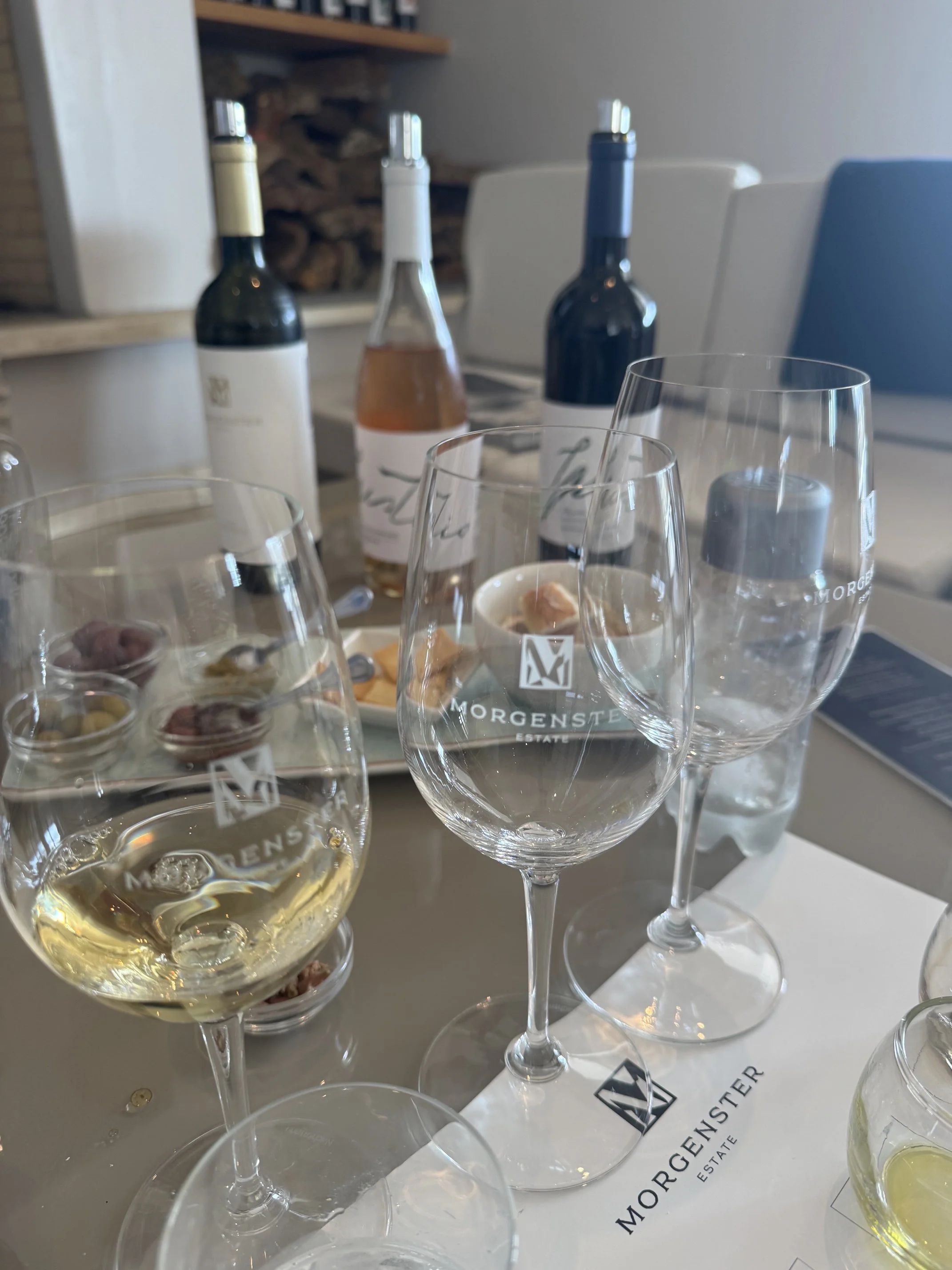
Sampling the olive oil and wines from Morgenster Estate, just east of Cape Town.
Finally, thank you all for your kind messages you sent when you heard us on BBC Radio 4 The Food Programme at the end of the month. The presenter Leyla Kazim was great fun to be around, very enthusiastic, and genuinely loved her first ever tasting of English Olive Oil. For those of you who missed the programme you can find the link here to the episode, and our section starts at 24 minutes and 40 seconds.
We will continue to keep you up to date on Instagram and Facebook @TheEnglishOliveCo, and please share and like any of our posts to spread the word on English Olive Oil!
Wishing you all a great summer!
Best wishes, David